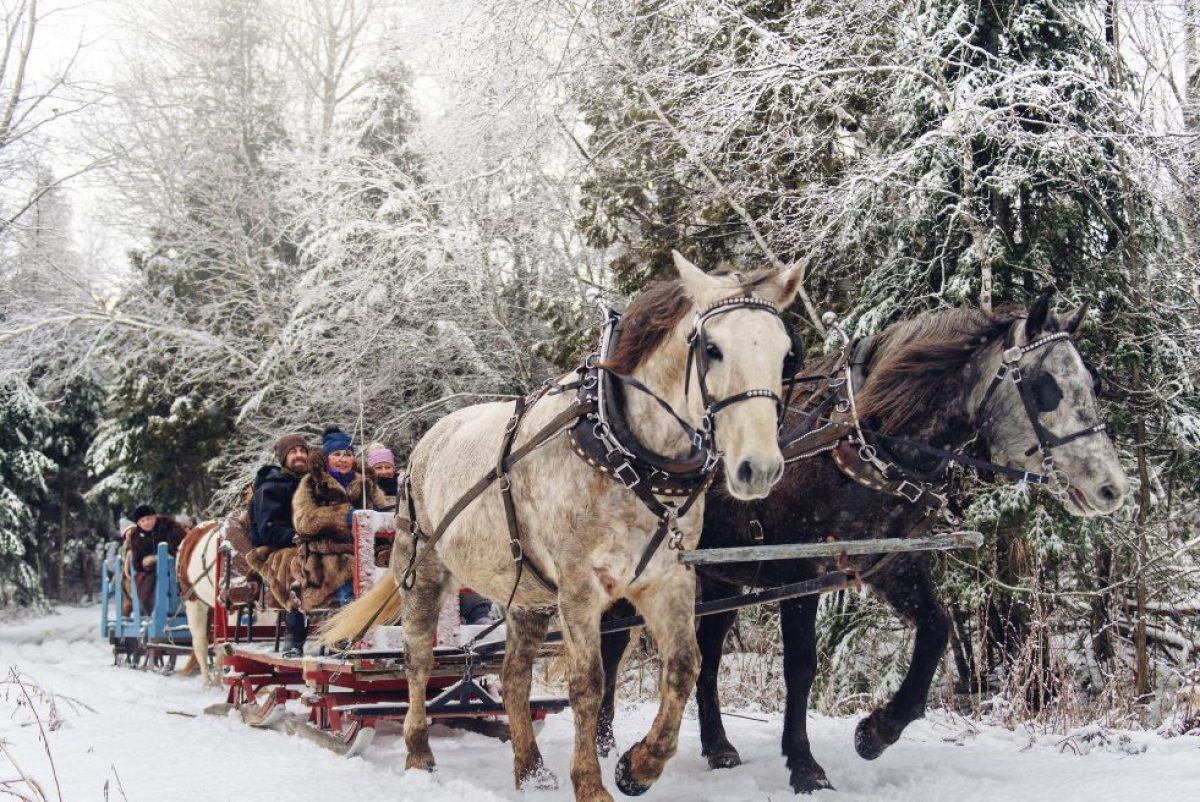
More Sleigh Bells, Less Cow Bells: Preparing for Christmas
For most people, Christmas sparks images of glowing trees, warm kitchens, and time spent lingering over coffee with family. But in agriculture, December tends to sound a little different.
Feeding doesn’t pause for holidays, waterers still freeze, critters still get sick. Many producers find themselves doing chores in the dark while everyone else unwraps gifts. Often, we feel like we can’t step back, even for a moment.
Below are practical, realistic strategies to help you carve out true downtime this Christmas while keeping your animals safe, your operation efficient, and your stress levels low.
Think of it like winterizing your mental health – preparing things so you aren’t running on fumes by the time the big day arrives.
Start With The 5 P’s
Prior | Preparation | Prevents | Poor | Performance
This one is simple (but sometimes we need a reminder):
Anything that can be done ahead of time, do ahead of time.
Christmas might be our excuse to implement these processes, but the effects will be long lasting. Much like you would prepare when calving season arrives, or stocking parts before seeding, do the same for the holiday season.
This includes:
- Scheduling deliveries (salt, feed, fuel, and medications)
- Prepping bedding
- Checking heaters, pumps, and waterers (If anything looks questionable, assume it will fail on December 25th)
- Ordering replacement parts (because it’s not if, it’s when)
Good news! You are included in the 5 P’s process!
Front-load your December with small, sanity-saving habits:
- Aim to go to bed earlier
- Eat consistently (real meals, not just coffee)
- Drink water (real water, not just coffee)
- Take the time to reflect on the year. (The wins and the learnings)
Think of this window as your holiday buffer. Every hour of preparation now becomes an hour of peace later.
Make Your “Holiday Chore Plan” (And Communicate It)
Even if you’re only taking a partial day off, having a chore plan creates clarity and reduces tension – both for you and for anyone helping. This plan needs to be clear, prioritised and communicated.
Yes, that means the dreaded “meeting”. Get a box of donuts, put on the coffee, talk it out. It can be a great opportunity to connect before the holidays and make sure everyone is on the same page.
A good holiday chore plan includes:
- Who is responsible for chores each day
- Whether it’s family members, hired staff, or neighbours, write it down.
- Clear expectations prevent misunderstandings that spill into frustration.
- A prioritized chore list
- Some tasks are urgent (feeding, health checks, water).
- Some are flexible (fence repairs, deep cleaning).
- Some can wait until January (organizing the shop… again).
- A backup plan
- Because holiday storms happen.
- Because equipment breaks.
- Because cows don’t know it’s Christmas.
- Visibility
- Write the plan on a whiteboard, put it in your phone notes, email it to everyone, tape it to the shop fridge.
- What matters is that everyone can find it.
Build a “Holiday Emergency Kit”
Speaking of a back up plan, A holiday emergency kit keeps your stress down when things go sideways.
Gather the following in a dedicated space:
- Extra hoses
- Heat gun
- Extension cords
- Halters, ropes, sorting sticks
- Flashlight or headlamp
- Batteries
- Fuses
- Gloves, toques, hand warmers
- First-aid kit (for humans and livestock)
- Anything else that could be considered a “high risk, quick fix” item
This kit saves time and gets you back in front of the fire before you can finish the first verse of
“Rudolph the Red Nosed Reindeer”.
ASK FOR HELP (Yes, Even At Christmas)
Christmas is the perfect time to lean on your community and let them lean on you:
- Neighbourhood chore swaps (you take Christmas Eve, they take Christmas morning)
- Local youth looking for a little pocket money over the holidays
- Staff who want the extra hours
- Family visiting from out of town (a great opportunity for connecting over our lifestyle)
Asking for help is not weakness – it’s strategy. It lets you protect your mental health without compromising your responsibilities.
If Christmas Is Hard, You’re Not Alone
For some folks, Christmas is a warm, happy time. For others, it brings stress, loneliness, or heavy memories. Christmas often intensifies those feelings of stress and guilt; you deserve care just as much as those around you.
If the holidays feel overwhelming, please, reach out to:
- A neighbour
- A family member
- Another farmer
- A mental health professional
We Live This Life Because We Love This Life
Christmas on the ranch will never be chore-free – and that’s okay – but it can be calmer, safer, and more meaningful when you prepare intentionally.
- Tidy barns lead to tidy minds.
- Clear plans reduce stress.
- Asking for help builds community.
- Boundaries protect your wellbeing.
- Small, joyful moments remind you why this life matters.
You work hard all year. This Christmas, give yourself permission to rest – even a little.
* * *
Ashley Nicholls is an Alberta based agriculture consultant and speaker, with a passion for human management systems in farming and ranching. Through his work with REACH Agriculture Strategies, he supports operations across North America in improving communication, leadership, and employee wellbeing. Ashley’s signature framework, Low-Stress People Handling, helps agricultural teams build resilient cultures that improve both performance and employee retention.
Ashley came into agriculture later in life and brings a blend of lived experience, business strategy, and deep respect for rural communities. His experience is grounded in real conversations with producers, ranch families, and agricultural workers across Canada, focusing on practical tools that make life in agriculture healthier, safer, and more sustainable.
Email: [email protected]
Website: www.reachag.ca
Instagram: @reachagstrategies
LinkedIn: https://www.linkedin.com/in/ashley-nicholls-/